
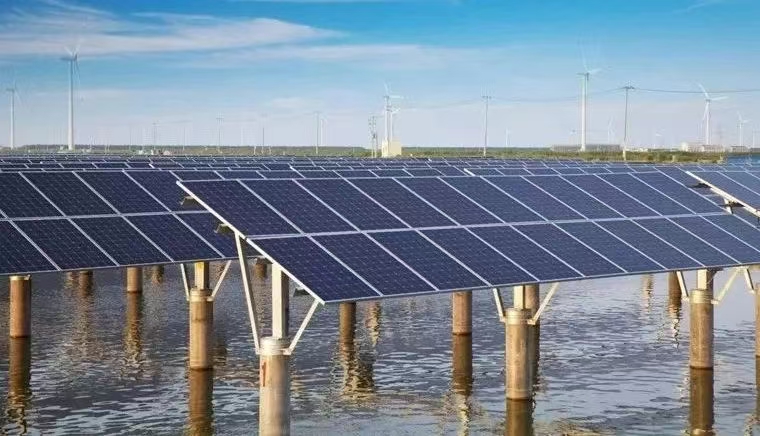
Introduction: The Coastal Challenge
Coastal regions account for 40% of global solar installations (IEA 2025), but salt spray, humidity, and UV exposure demand materials that balance corrosion resistance, structural strength, and cost. This blog compares three popular mounting materials: Aluminum alloy, Hot-dip galvanized (HDG) steel (Q235, 80μm zinc), and zinc-aluminum-magnesium (ZMAD) steel (S350GD+ZM, 275gsm coating).
Material Analysis: Pros, Cons, and Coastal Suitability
1. Aluminum Alloy
Pros:
✅ Naturally corrosion-resistant (no coating required).
✅ Lightweight (2.7 g/cm³), reducing shipping and labor costs by ~15%.
✅ Aesthetic appeal for residential/commercial rooftops.
Cons:
❌ Lower tensile strength (276 MPa) – risky in high-wind zones (>50 m/s).
❌ Higher upfront cost ($0.15/W vs. $0.08/W for steel). (
❌ Vulnerable to galvanic corrosion if paired with steel components.
Best For: Low-wind coastal rooftops with budget flexibility.
2. Hot-Dip Galvanized Steel (Q235, 80μm Zinc)
Pros:
✅ High strength (470 MPa tensile) – ideal for heavy loads and typhoon zones.
✅ Low initial cost ($0.08/W).
✅ Widely available globally.
Cons:
❌ Zinc degrades in salt fog: 80μm coating lasts 12–15 years (ISO 9227:2025).
❌ Requires annual anti-corrosion sprays (+$1,200/MW/year).
❌ Heavy (7.8 g/cm³), increasing installation complexity.
Best For: Short-term projects (<15 years) or budget-constrained installations.
3. Zinc-Aluminum-Magnesium Steel (S350GD+ZM, 275gsm)
Pros:
✅ Superior corrosion resistance: 5,000+ hours in salt spray tests (vs. HDG’s 1,800 hrs).
✅ 25-year lifespan with minimal maintenance (NREL 2024).
✅ High strength (550 MPa) + lighter than HDG (6.5 g/cm³).
✅15% lower cost HDG ($0.08/W)
Cons:
❌ Limited certified suppliers (e.g., Nippon Steel, ArcelorMittal).But Tender Energy purchase raw material from Top 5 brand suppliers.
Best For: Harsh coastal environments requiring long-term ROI.
Head-to-Head Comparison
| Criteria | Aluminum | HDG Steel | ZMAD Steel |
| Corrosion | Resistance | Moderate | Low High |
| Tensile Strength | 276 MPa | 470 MPa | 550 MPa |
| Weigh | 2.7 g/cm³ | 7.8 g/cm³ | 6.5 g/cm³ |
| Lifespan | 20–25 yrs | 12–15 yrs | 25+ yrs |
| Cost per MW (2024) | $130,000 | $80,000 | $68,000 |
Cost-Benefit Breakdown (20-Year Cycle)
(Based on 1 MW System in Coastal Zone)
| Material | Initial Cost | Maintenance | Replacement | Total Cost |
| Aluminum | $130,000 | $5,000 | $0 | $135,000 |
| HDG Stee | $80,000 | $24,000 | $80,000 | $160,000 |
| ZMAD Steel | $68,000 | $8,000 | $0 | $76,000 |
Recommendations for Coastal Projects
Top Choice: ZMAD Steel
- Why: Unmatched corrosion resistance, lifecycle cost savings, and compliance with IEC 6303-2024 typhoon standards.
- Action: Partner with certified suppliers (e.g., Nippon Steel) and specify ASTM A1046 or JIS G3321 standards.
Budget Option: HDG Steel + Nano-Ceramic Coating
Innovation: 2025’s nano-coatings extend HDG lifespan to 20 years (tested in Florida’s Gulf Coast).
Avoid Aluminum If:
- Wind speeds exceed 50 m/s.
- Soil salinity exceeds 3.5% (risk of pitting corrosion).
Conclusion
For coastal solar installations, ZMAD steel (S350GD+ZM) is the clear winner, balancing durability, strength, and lifecycle savings. While HDG steel suits short-term budgets, its hidden maintenance costs and replacement risks make it a poor long-term investment. Aluminum remains niche for low-wind, aesthetic-driven projects.