
As a solar installer, have you ever struggled to choose the right foundation for a ground-mount project? Facing different soil conditions, budget constraints, and equipment availability, how do you decide between the three main options—Concrete Piers, Driven Piles, and Helical Piles—to find the most cost-effective, safe, and efficient solution? This guide provides a detailed, practical decision-making framework from an installer’s perspective.
1. Key Factors: How to Quickly Narrow Down Your Options Based on Project Conditions
Before selecting a solar foundation, always evaluate these four core factors—they directly impact your project’s success and profitability:
- Soil and Geotechnical Report: This is the most critical first step. Rock, sand, clay, or backfill decisively influence the foundation choice.
- Construction Equipment Availability: Can you easily access a pile driver or helical pile installation machine at the project site? This affects feasibility and cost.
- Project Budget and Timeline: Are you prioritizing the lowest upfront material cost or the shortest installation time to reduce overall project costs?
- Safety and Long-Term Reliability: Consider resistance to wind uplift, settlement, and soil corrosiveness.
2. In-Depth Comparison: The Three Main Foundation Systems
1. Concrete Piers: The Adaptable “All-Rounder”
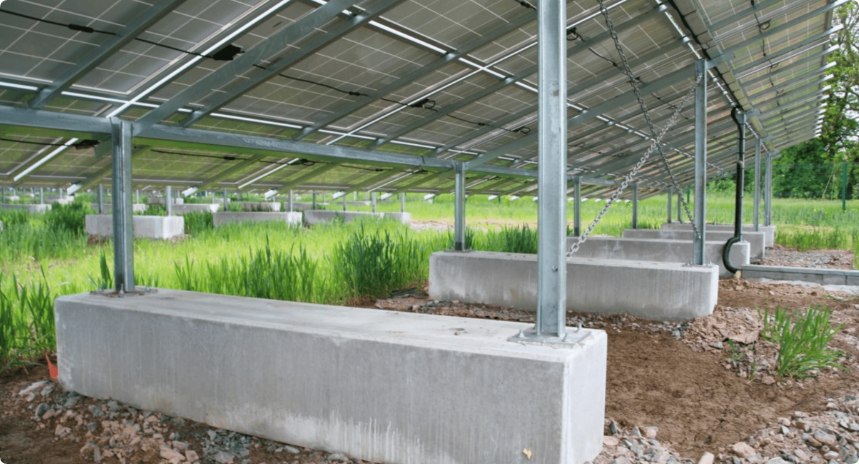
- Best For: Rocky terrain, remote sites with limited equipment access, small-scale projects.
- Key Advantages:
- Extremely wide soil adaptability; the preferred choice for undisputed for rocky areas.
- Low equipment requirements; no need for large, specialized machinery.
- Low material costs; concrete and rebar are readily available.
- Key Disadvantages:
- Long construction cycle; involves excavation, pouring, and curing. High labor cost and weather-dependent.
- Relatively weaker resistance to uplift; relies heavily on its own weight.
2. Driven Pile Foundations: The Traditional “Power” Player
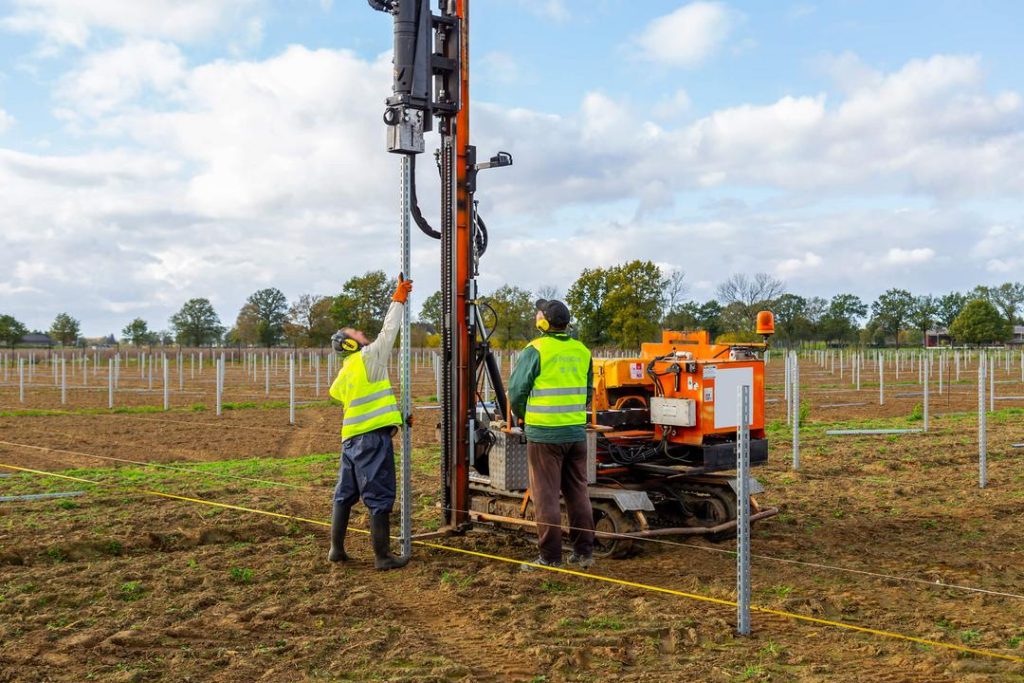
- Best For: Homogeneous soils, large-scale projects, areas with good equipment access.
- Key Advantages:
- Fast installation speed once equipment is on site.
- Good lateral load capacity due to tight soil compaction.
- Key Disadvantages:
- Heavily reliant on specialized driving equipment; costs can soar in remote areas.
- Not suitable for soils with large boulders or shallow bedrock.
- The driving process can damage the pile’s protective coating (e.g., galvanization), impacting long-term corrosion resistance.
3. Helical Piles: The Fast, Reversible “Tech” Solution

- Best For: Time-critical projects, high-wind areas, sites requiring land restoration, or temporary installations.
- Key Advantages:
- Fastest installation speed; no excavation or curing time, ready for immediate load.
- Excellent resistance to wind uplift due to the helical plates.
- Removable and reusable, a major advantage for temporary sites or strict land restoration requirements.
- Minimal soil disturbance.
- Key Disadvantages:
- Highest per-pile material cost and equipment dependency.
- Cannot be used in rocky or very hard, dense soils.
- Performance is highly dependent on professional installation with proper torque control; insufficient torque risks settlement.
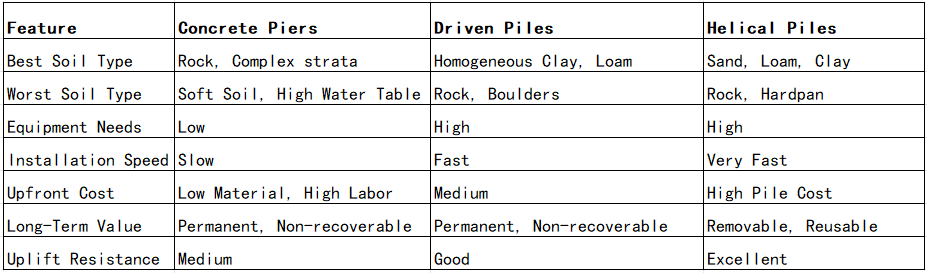
Quick-Comparison Table
4. Decision Flowchart: Find the Best Solution in 5 Steps
Follow this simple process for a quick decision:
- Start with a Geotechnical Report. Is there shallow bedrock or many boulders? YES → Your best choice is [Concrete Piers].
- NO → Evaluate Equipment Availability. Is pile driving equipment difficult/expensive to get? YES → Your most practical choice is [Concrete Piers].
- NO → Evaluate Project Schedule. Is the timeline extremely tight? YES → Strongly recommend [Helical Piles].
- NO → Evaluate Budget & Long-Term Needs. Is minimizing upfront cost the top priority? YES → Consider [Concrete Piers].
- NO → Is high uplift resistance or removability required? YES → Recommend [Helical Piles]. NO → [Driven Piles] are a reliable standard choice.
5. Conclusion and Professional Advice
Choosing the optimal ground-mount solar foundation is an art of balancing soil conditions, equipment, budget, and timeline. For most installers, Helical Piles offer clear advantages in speed and performance, while Concrete Piers provide unmatched flexibility in challenging conditions.
Your Next Step:
If you’re evaluating foundations for a specific project or need professional structural calculations for local wind and snow loads, our team is here to support you.
Contact our technical team today for a free consultation and quote!